
EU CBAM Transition Rule Adds Carbon Declarations
On June 21, 2026, the European Commission released transition-phase implementing details for CBAM that introduce a new documentation requirement for certain products shipped into the EU. For exporters of industrial sealing systems, hydraulic hoses, and vibration-damping rubber components, the change matters because carbon footprint reporting is no longer only a general sustainability topic but a shipment-linked compliance item tied to customs timing, third-party verification, and product-level LCA preparation.
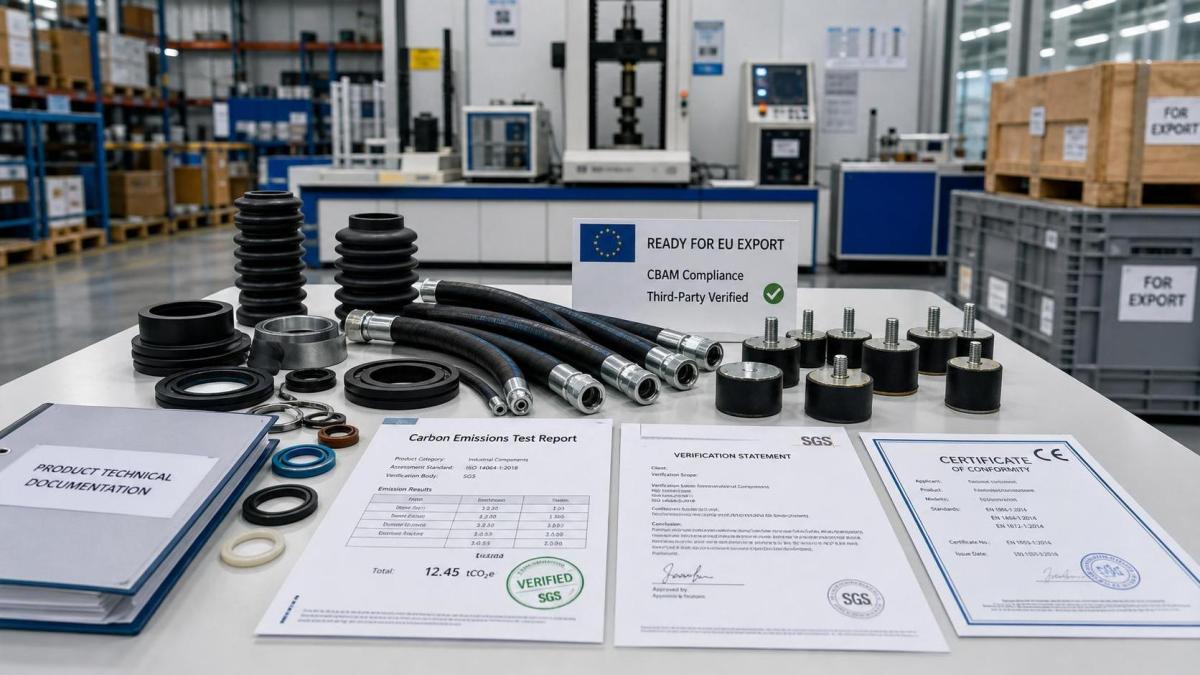
What the new requirement now confirms
The published measure is identified as Commission Delegated Regulation (EU) 2026/XXXX. According to the provided event summary, from October 1, 2026, imports into the EU of industrial sealing systems, including FFKM, EPDM, and PU sealing products, as well as hydraulic hoses and damping components such as NVH mounts and LRB, must be accompanied by a carbon footprint report certified by an accredited body.
The same summary states that the rule covers a list of third-party verification bodies already authorized by the EU, including TUV NORD. It also confirms that Chinese exporters are required to complete product-level LCA modeling and verification before customs declaration.
Where the pressure is likely to appear first
Export shipments face a new pre-customs document threshold
From an industry perspective, exporters are likely to feel the change first because the requirement is linked to goods entering the EU and must be addressed before customs filing. For companies shipping seals, hoses, or damping components, compliance attention is likely to move upstream into document readiness, verification timing, and product-level emissions evidence rather than being handled only at the final shipping stage.
Manufacturing teams may need tighter product-level data coordination
Analysis shows that manufacturers of covered sealing and rubber components may be affected through the need to prepare product-level LCA models for verification. The operational impact is likely to fall on technical records, material and process data organization, and internal coordination between production, quality, and export compliance functions.
Buyers and supply chain partners may start checking evidence earlier
What deserves closer attention is the likely effect on procurement and delivery coordination. EU-facing customers, importers, and supply chain service providers may place greater emphasis on whether a shipment already has a verified carbon footprint report and whether the selected verification body falls within the recognized scope referenced by the new rule.
Verification and testing-related service providers gain a more direct role
The event summary makes third-party verification an explicit part of market access for the covered product categories. Observably, this gives accredited verification bodies and related compliance service providers a more central position in export preparation, especially where certification timing could influence shipment scheduling and document completeness.
What companies should watch in practical terms
Check whether product scope matches the covered categories
Companies involved in FFKM, EPDM, PU sealing products, hydraulic hoses, NVH mounts, and LRB should first review whether their exported goods fall within the covered scope described in the released rule. This is a practical starting point for deciding which products need product-level LCA modeling and certified carbon footprint documentation before shipment.
Prepare verification pathways before customs filing deadlines
Analysis shows that timing may become a key compliance issue because the provided summary links verification completion to the pre-declaration stage. Businesses should therefore pay attention to whether internal product data, supporting technical files, and third-party verification arrangements can be completed in line with export delivery schedules.
Review document packages used in sales and delivery
For contracts and shipments involving the EU market, companies may need to examine whether carbon footprint reports, verification records, and related technical materials should be reflected in document packages used for customs, delivery, or customer review. The provided information does not define full execution details, so this should be treated as an area to monitor rather than a settled paperwork checklist.
Track authorized verification scope and later clarifications
It is more appropriate to understand the current development as a rule that has entered a clearer implementation stage, while some practical interpretation may still require continued observation. Companies should watch for later official clarifications on verification scope, accepted reporting formats, and how buyers or market channels incorporate the requirement into procurement and tender documentation.
How this development is best understood now
Observably, this is not merely a policy signal in abstract terms. The provided summary points to a dated implementation trigger, identified product groups, recognized third-party verification involvement, and a pre-customs compliance step. That makes it more appropriate to understand the development as an execution-oriented rule change for affected exports, while still recognizing that market practice and detailed interpretation may continue to evolve.
From an industry perspective, the most important implication is that carbon footprint evidence is moving closer to routine trade documentation for the covered component categories. The immediate issue is less about broad market forecasting and more about whether exporters, manufacturers, and trade-support functions can align product data, verification arrangements, and shipment preparation in time.
A measured takeaway for the market
This update is best read as a concrete compliance development for covered sealing, hose, and damping component exports to the EU rather than as a general sustainability statement. The confirmed facts already indicate a change in pre-shipment preparation and documentation expectations.
At the same time, a cautious reading remains necessary. Analysis shows that the market should treat this as a rule now entering practical application, while continuing to monitor detailed execution language, verification practice, customer document requests, and feedback from actual trade flows after the October 1, 2026 start date.
Basis of this article and what still needs verification
This article is generated from the user-provided news title, event date, and event summary. For developments of this kind, commonly relevant source types may include official regulatory releases, notices from supervisory authorities, customs or trade administration information, industry association updates, standard-setting documents, and reporting by established professional media.
No specific official source link was provided in the input, so the exact official publication link still needs to be verified on an ongoing basis. Continued attention should also be given to later policy clarifications, certification interpretation, tender document changes, industry feedback, and how affected companies implement the requirement in practice.
Search News
Hot Articles
- API 682 & REACH ComplianceRobotics Compliance Reporting: How to Build an Audit-Ready Evidence TrailSep 21, 2026
- API 682 & REACH ComplianceVacuum Gripping Systems for Sheet Metal: How to Size Cups for Safe, Mark-Free LiftingSep 20, 2026
- API 682 & REACH ComplianceSelecting Precision Servo Reducers for Robotics: Backlash, Torque, and Inertia MatchSep 19, 2026
Popular Tags
Need ExpertConsultation?
Connect with our specialized leisureengineering team for procurementstrategies.
Recommended News