
Used Banbury Mixer and Rubber Extruder Buying Guide
A used Banbury mixer can be a strong purchase when the buyer understands the full rubber processing route. It is not only a mixing chamber with rotors and a ram. In many projects, the mixer must work with feeding equipment, dust collection, cooling, open mills, batch-off, rubber extruders, pelletizing equipment, strainers, conveyors and controls. A low equipment price can turn into a slow project if the machine scope does not fit the compound, output target or downstream process.
This guide is written for buyers comparing used rubber machinery for tire materials, technical rubber goods, specialty elastomers, reclaim rubber, masterbatch or compound preparation. The main decision is not whether a Banbury mixer is useful. The real decision is whether the offered machine can mix the intended rubber compound safely, discharge cleanly, connect with the next process and be restored to production condition without hidden repair work.
When buyers search for a banbury mixer pelletizing system, they often need a connected process rather than a single machine. The mixer prepares the compound, but the final form may require sheet cooling, pelletizing, straining, extrusion or another downstream step. A useful supplier discussion should therefore include mixer volume, rotor type, motor power, ram condition, temperature control, discharge method and how the compound will be handled after mixing.
Define the Required Rubber Process Before Asking for Price
The first mistake in buying used rubber processing equipment is asking for a price before defining the process. A Banbury mixer for one rubber compound may be unsuitable for another. Natural rubber, EPDM, NBR, silicone, FKM, reclaimed rubber and specialty compounds behave differently under heat, shear and pressure. Filler loading, oil level, curing system and target Mooney viscosity can also change the required machine configuration.
A buyer should begin with a short process brief: compound family, batch weight, target output, feeding method, discharge form, cooling method, available floor space, power supply, operator skill level and preferred automation level. This brief helps the seller confirm whether the offered mixer and downstream equipment are close to the requirement. Without it, the discussion becomes a list of machine names, and that rarely leads to a reliable purchase.
For a used machine, process definition also helps decide what can be accepted. A machine with cosmetic wear may be acceptable if the chamber, rotors, gearbox and control system are sound. A machine with poor documentation may still be usable if a physical inspection and test run are possible. A machine that lacks critical downstream equipment may be a poor choice even if the main mixer looks attractive.
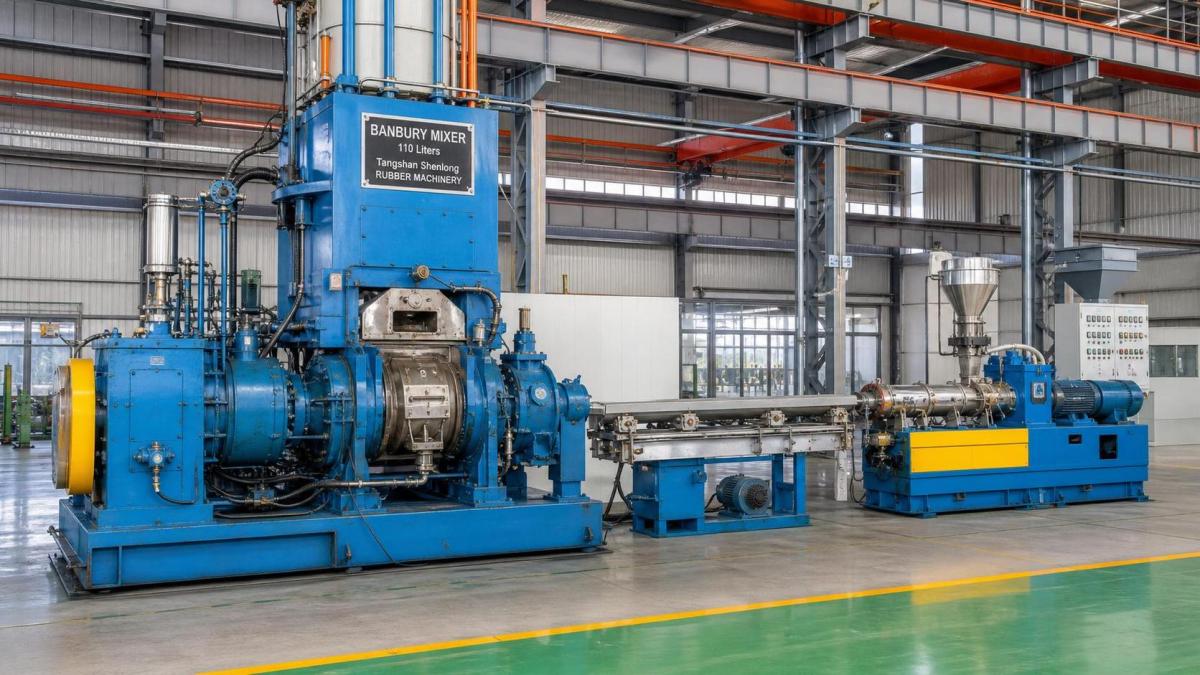
How a Banbury Mixer Fits With Extrusion and Pelletizing
A Banbury mixer creates dispersion and mixing under pressure. After discharge, the compound must be cooled, shaped, strained, stored or sent to the next process. In many plants, the hot batch is dropped to a two-roll mill or sheet-out system, then passed through cooling and stacking. In other plants, the compound is sent toward an extruder, strainer or pelletizing setup for easier handling and feeding.
The phrase banbury mixer pelletizing system can refer to different arrangements. One buyer may mean a mixer with a downstream pelletizer for masterbatch. Another may mean a mixing line followed by a rubber extruder, strainer and cutting equipment. A third may need only a mixer and batch-off line, with pelletizing handled elsewhere. The seller and buyer should define the equipment boundary in writing.
Rubber extruders also vary. A hot feed extruder, cold feed extruder, pin barrel extruder or strainer may serve different duties. The screw design, L/D ratio, barrel zones, drive system and head tooling all affect whether the extruder can process the compound. If the buyer needs filtration before pelletizing or further shaping, screen pack access, head design and pressure handling become important inspection items.
Used Equipment Inspection Table
Capacity Numbers Need a Product Context
Buyers often compare Banbury mixers by chamber volume or motor power. Those numbers are useful, but they do not describe real output by themselves. Output depends on compound density, fill factor, mixing cycle time, cooling time, discharge handling and downstream capacity. A larger chamber can still create a production bottleneck if the mill, extruder, cooler or pelletizer cannot handle the batch rate.
The seller should explain the previous use of the machine. A mixer formerly used for carbon black filled rubber may have different wear patterns from a mixer used for cleaner specialty compounds. A machine that handled abrasive filler may need closer inspection of chamber surfaces, rotor tips and seals. A machine previously used with sensitive compounds may require cleaning and cross-contamination review before reuse.
Ask for the conditions behind any output claim. What compound was mixed? What was the batch weight? What was the cycle time? Was the output measured at the mixer only, or at the complete line including cooling, straining and packaging? If the buyer plans a banbury mixer pelletizing system, the pelletizer or extruder must be reviewed as part of the output calculation.
Key Questions for Used Banbury Mixer Buyers
The following questions help turn a general quotation into a useful procurement discussion:
- What is the exact model, chamber volume, rotor type and motor power?
- What material family was the mixer used for before removal?
- Are the chamber, rotor, ram, gearbox and hydraulic system available for inspection?
- Can the seller provide a no-load test, loaded test, video record or inspection report?
- What downstream equipment is included: open mill, batch-off, strainer, rubber extruder, pelletizer, cooler or conveyor?
- Which parts are included in the price, and which repairs are excluded?
- Are manuals, wiring diagrams, PLC backups and spare-part lists available?
- Who is responsible for dismantling, packing, loading, installation guidance and commissioning support?
These questions do not replace an engineering inspection, but they reduce the chance of buying a machine that looks complete in photos and becomes incomplete during installation. A reliable seller should be able to answer most of them or explain what must be verified before shipment.
How to Evaluate the Rubber Extruder Portion
If the project includes a rubber extruder, the buyer should inspect it with the same care as the Banbury mixer. A worn screw or barrel may reduce pressure stability and create inconsistent output. A damaged head or weak heating system may limit product changeover. Poor screen access may make straining difficult. These issues matter whether the extruder is used for filtering, shaping, pellet preparation or feeding another production step.
Extruder selection should follow compound behavior. Some compounds need careful temperature management to reduce scorch risk. Some need filtration because contaminants or unmixed particles can cause defects later. Some are too sticky or soft for certain pelletizing arrangements. The buyer should share compound information with the seller and avoid assuming that any rubber extruder can handle any rubber material.
For buyers reviewing second-hand options, a product listing from Machinery Reborn can be used as a starting point for comparing used Banbury equipment, but final selection should still depend on the compound, machine condition, scope of supply and inspection result.
Commercial Terms and Delivery Risk
Used rubber machinery purchases often fail because the commercial agreement is too vague. The quotation should state whether the machine is sold as-is, refurbished, tested or guaranteed for certain functions. It should list included equipment, spare parts, control cabinets, hydraulic stations, cooling units, tooling and documents. It should also state who pays for dismantling, loading, inland transport, export packing, sea freight, insurance and installation.
Photos are not enough. Request nameplate photos, serial numbers, cabinet photos, rotor and chamber photos, gearbox photos, hydraulic station photos and video of movement where possible. If the machine is already dismantled, ask for dismantling records and packing photos. If the machine is still installed, a test run before removal is more valuable than a general statement that the machine was working before.
Payment terms should match verification level. If the buyer cannot inspect the machine personally, third-party inspection or detailed video inspection becomes more important. A staged payment tied to inspection, dismantling, packing and loading can reduce risk. Buyers should also confirm whether the machine dimensions, weight and packing method are suitable for container loading or special transport.
Procurement Checklist
- Confirm the target compound family, batch size, output target and downstream form before selecting a machine.
- Match mixer chamber volume, rotor type and motor power to the intended process, not only to the available budget.
- Inspect chamber, rotors, seals, ram, gearbox, hydraulics, temperature control and discharge system.
- Review the downstream route: mill, batch-off, rubber extruder, strainer, pelletizer, cooler and material handling.
- Ask whether the machine can be tested under load or at least operated for mechanical checks.
- Separate machine price from repair, control upgrade, packing, transport, installation and commissioning cost.
- Put included and excluded items in writing before payment.
- Check that the supplier can support export documents, loading plans and basic technical communication.
FAQ
Is a used Banbury mixer suitable for specialty elastomers?
It can be suitable, but the buyer must check compound sensitivity, contamination risk, temperature control and previous machine use. Specialty elastomers may need tighter cleaning, better heat management and clearer documentation than general rubber compounds.
Can one used line include mixing, extrusion and pelletizing?
Yes, but the buyer should confirm the exact equipment boundary. A mixing and pelletizing line may include different combinations of mixer, mill, extruder, strainer, cutter, cooler and conveyors. The quotation should list each included machine.
What is the biggest hidden cost in used rubber machinery?
Common hidden costs include rotor or chamber repair, gearbox work, hydraulic leakage, electrical upgrades, missing documents, tooling gaps, packing and installation labor. These costs should be reviewed before comparing offers.
Should buyers choose a larger mixer for future expansion?
A larger mixer can help future output, but it may also require more power, stronger downstream equipment, larger cooling capacity and more floor space. Expansion planning should include the whole line, not only the mixer chamber.
Final Buying Advice
A used Banbury mixer and rubber extruder purchase should be treated as a process decision. The buyer needs enough detail to judge whether the machine can support the intended compound and production route after shipment. The safest approach is to define the target material, inspect the main mechanical systems, confirm the downstream process and write the commercial scope clearly.
Price matters, but machine fit matters more. A lower-cost machine with missing downstream equipment, weak controls or uncertain wear can delay production and consume the savings. A well-documented used line with a clear inspection path may be the better decision even if the first quotation is higher.
Editorial Review Note
This article is buyer-facing guidance for used rubber processing machinery procurement. It avoids fabricated prices, unsupported performance claims and invented case numbers.
Search News
Hot Articles
- API 682 & REACH ComplianceWhere Edge Computing Delivers the Most Value in Industrial Robotics CellsSep 15, 2026
- API 682 & REACH ComplianceHow to Evaluate Robot Torque Sensor Manufacturers for Precision Assembly LinesSep 14, 2026
- API 682 & REACH ComplianceSelecting an Industrial Sensing Manufacturer: Calibration, Traceability, and DeliverySep 13, 2026
Popular Tags
Need ExpertConsultation?
Connect with our specialized leisureengineering team for procurementstrategies.
Recommended News