
ECHA Targets Six PFCA Substances in FFKM
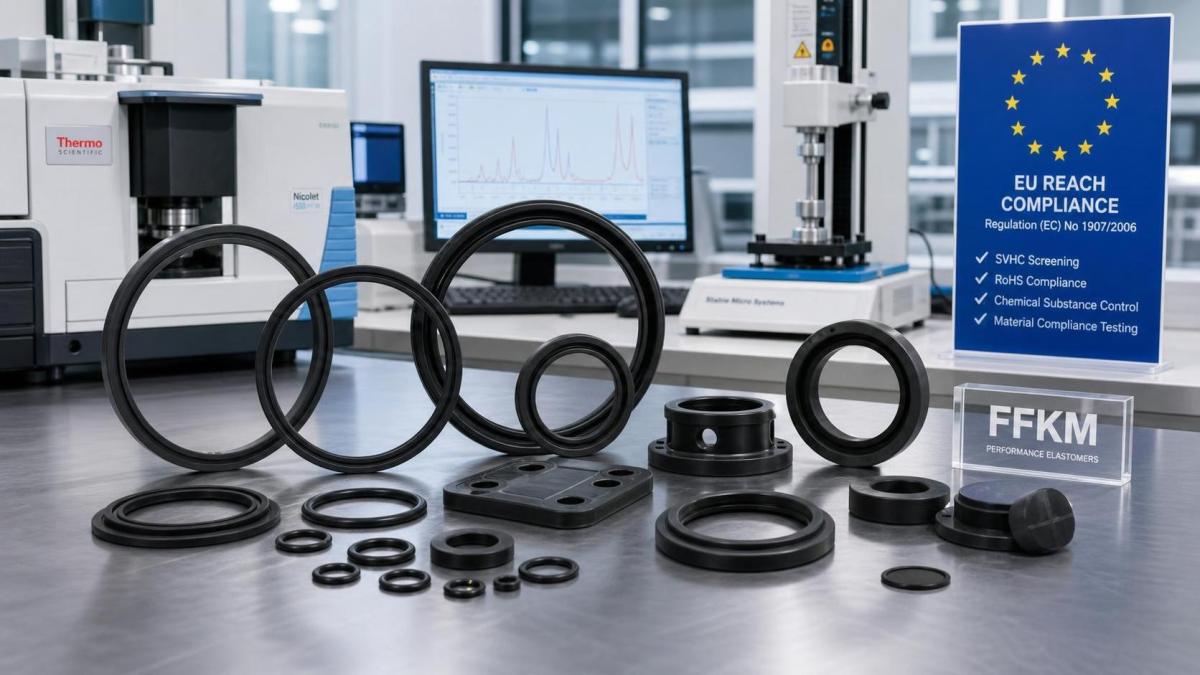
On July 16, 2026, the European Chemicals Agency (ECHA) formally moved to tighten REACH restrictions on six perfluoroalkyl carboxylic substances, including PFHxA and PFHpA, in FFKM seals, gaskets, and other high-performance elastomer components. With mandatory enforcement set for October 17, 2026 and an import concentration limit of 0.025 mg/kg for the relevant substances in FFKM products entering the EU, this development merits close attention from overseas buyers, distributors, and equipment OEMs because it directly affects compliance review, sourcing decisions, and material substitution planning.
What the July 16 Draft Sets Out
According to the information provided, ECHA released a draft amendment to the REACH regulation on July 16, 2026. The draft adds six perfluoroalkyl carboxylic acids (PFCAs), including PFHxA and PFHpA, and their derivatives to the restriction list.
The scope explicitly covers FFKM products, including seals, gaskets, and high-performance elastomer components. The restriction is scheduled to become mandatory on October 17, 2026.
For FFKM products imported into the European Union, the concentration of the relevant substances must not exceed 0.025 mg/kg. The provided information also indicates that overseas purchasers, distributors, and equipment OEMs need to begin supplier compliance reviews and alternative material assessments immediately.
Where the Impact Is Likely to Appear First
Import-facing purchasing functions will face immediate screening pressure
From an industry perspective, buyers and sourcing teams connected to the EU market are likely to feel the impact early because the restriction is tied to imported FFKM products. The main pressure point is upstream verification: companies will need clearer confirmation on whether the relevant substances are present and whether the stated concentration threshold can be met.
Distributors may need to recheck stock and product documentation
For distributors handling FFKM seals, gaskets, or related elastomer components, the issue is not only product movement but also product status within the EU compliance context. Analysis shows that documentation, supplier declarations, and product traceability are likely to become more important in routine sales and fulfillment decisions.
Equipment OEMs may need to reassess material choices in assemblies
OEMs using FFKM parts in equipment assemblies may be affected where these components are specified for sealing or high-performance operating conditions. What deserves closer attention is whether existing component selections remain suitable for EU-bound shipments, especially where a non-compliant sealing part could interrupt broader delivery schedules or customer acceptance.
What Companies Should Be Watching Now
Supplier compliance evidence needs closer review
Analysis shows that the first practical task is not broad policy discussion but document-level confirmation. Companies dealing in EU-bound FFKM products should review what suppliers can provide on substance compliance, concentration control, and the status of affected product lines.
Alternative material assessment should start before enforcement
The provided information specifically points to alternative material evaluation. That matters because substitution work often involves technical review, customer communication, and internal approval steps. For businesses supplying into the EU, the key issue is whether alternatives can be assessed in time for orders that will be delivered after the October 17, 2026 enforcement date.
Commercial communication may need to move earlier in the sales cycle
Observably, this is not only a regulatory matter but also a transaction management issue. Importers, distributors, and OEMs may need earlier discussions with suppliers and customers about product scope, compliance status, and any possible change in component selection for EU-related business.
Policy wording and business execution should be tracked separately
It is more appropriate to understand this as both a defined compliance requirement and an ongoing implementation task. The concentration limit and enforcement date are clear in the provided information, but companies still need to translate those points into procurement controls, order review processes, and delivery planning.
Why This Reads as More Than a Routine Update
Analysis shows that this development should not be treated as a generic chemicals-policy headline. The restriction is tied to a specific material category, FFKM, and to a measurable import threshold for the EU market. That makes it commercially relevant for companies whose products may contain these elastomer components even when the regulated material is only one part of a larger assembly.
At the same time, it is more appropriate to understand this as a concrete near-term compliance signal rather than a fully closed industry outcome. The enforcement date is close enough to require action now, while the broader operational effects across supply relationships and material choices still need continued observation.
How This Update Is Best Understood
In practical terms, this ECHA move points to a clear compliance change for EU-bound FFKM products and a near-term workload increase for sourcing, distribution, and OEM teams. The most rational reading is not to overstate market consequences, but to recognize that the rule creates an immediate need for supplier review and substitution assessment where affected products are involved.
Current conditions make this better understood as a defined regulatory requirement with wider supply-chain implications still unfolding. For industry participants, the key priority is to separate confirmed facts from operational assumptions and prepare on that basis.
Basis of This Article
This article is based on the user-provided news title, event date, and event summary concerning ECHA's July 16, 2026 REACH draft amendment covering six PFCA substances and their derivatives in FFKM products.
For this type of industry update, relevant source categories typically include official regulatory notices, company statements, industry association information, authoritative media coverage, and standard-setting or compliance-related documents. A specific official source link was not provided in the input, so the exact official publication path still needs to be verified on an ongoing basis.
Follow-up attention should remain on any official wording updates, implementation clarifications, and how affected companies translate the restriction into procurement, documentation, and delivery controls.
Search News
Hot Articles
- API 682 & REACH ComplianceWhere Edge Computing Delivers the Most Value in Industrial Robotics CellsSep 15, 2026
- API 682 & REACH ComplianceHow to Evaluate Robot Torque Sensor Manufacturers for Precision Assembly LinesSep 14, 2026
- API 682 & REACH ComplianceSelecting an Industrial Sensing Manufacturer: Calibration, Traceability, and DeliverySep 13, 2026
Popular Tags
Need ExpertConsultation?
Connect with our specialized leisureengineering team for procurementstrategies.
Recommended News